.
.
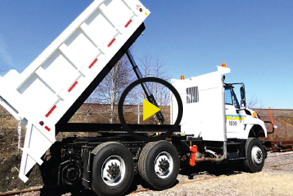
Hi-Rail Truck Conversion: How the Process Works From Truck to Rail-Ready Vehicle
If you've ever watched a pickup truck roll off a highway, drop a set of steel wheels, and drive straight onto a railroad track, you've seen a hi-rail conversion in action. It may look like a magic trick, but it is a precise, regulated engineering process that turns an ordinary work truck into a certified railroad maintenance vehicle.
At Mitchell Equipment, we've spent decades building and installing rail gear systems for railroads, contractors, and utility crews across North America. This guide explains the complete conversion process in plain language and answers the questions our sales and service teams hear most often.
What Is a Hi-Rail Truck Conversion?
A hi-rail, or high-rail, truck conversion is the process of installing a retractable rail gear system on a standard highway truck so it can travel on both roads and railroad tracks. The rail wheels lower to guide and support the truck on the rails. The truck's tires provide traction and braking; in friction-drive systems, the tires ride directly on the rail.
Once converted, the vehicle is used for track inspection, maintenance-of-way work, signal and switch repair, welding, and material hauling along the rail corridor. These jobs would otherwise require slower and more expensive rail-only equipment.
Why Fleets and Railroads Convert Trucks
Railroads and contractors choose hi-rail conversions for several practical reasons:
- Cost efficiency: Converting a suitable truck costs less than buying dedicated rail equipment.
- Flexibility: The same truck can work on the highway and along the rail corridor.
- Infrastructure demand: Railroads and contractors are expanding hi-rail fleets to support growing inspection and maintenance workloads.
- Labor efficiency: One crew truck can carry personnel, tools, and materials directly to the worksite.
The Hi-Rail Conversion Process, Step by Step
Here is how a standard truck becomes a rail-ready vehicle.
Step 1: Vehicle Assessment and Selection
Not every truck is a suitable candidate. The conversion shop evaluates:
- Wheelbase and frame: These must match the rail gear mounting specifications and required axle spacing.
- GVWR: The truck must be rated for the added weight of the rail gear, guide wheels, tool bodies, cranes, and payload.
- Drivetrain: Four-wheel drive or a specific axle configuration may be required, especially for friction-drive systems.
- Intended use: A light inspection vehicle needs different equipment from a truck carrying rail, tie plates, or a service crane.
Step 2: Choosing the Right Rail Gear System
This is the main engineering decision. Most conversions use one of two systems:
- Hydraulic rail gear: Front and rear guide-wheel assemblies raise and lower hydraulically from inside the cab. Operators can switch between road and rail quickly.
- Mechanical rail gear: A lower-cost system that is deployed manually and is often used for lighter-duty or less frequent rail work.
Gear also varies by drive type, including friction drive and powered rail-wheel drive, and by the load class needed for the truck's GVWR and job function.
Step 3: Installing the Rail Gear Assemblies
After the gear is selected, certified technicians:
- Mount the front assembly to the frame and align it with the truck's steering geometry.
- Mount the rear assembly to match the axle and wheel spacing.
- Install the pump, cylinders, control valves, hydraulic lines, and in-cab controls for hydraulic systems.
- Set and torque all mounting hardware to the manufacturer's structural specifications.
Rail gear is a load-bearing modification, so correct mounting and alignment are essential.
Step 4: Adding Rail-Specific Safety Equipment
A hi-rail conversion involves more than adding rail wheels. Under 49 CFR § 214.523, every new hi-rail vehicle must have an automatic change-of-direction or backup alarm that sounds for at least three seconds and an operable 360-degree intermittent warning light or beacon mounted outside the vehicle.
Conversion shops may also add a rooftop beacon mount, backup camera, warning devices, tool storage, cranes, or welding packages based on the customer's work requirements.
Step 5: Gauge, Tram, and Alignment Testing
Before the truck reaches a live track, technicians test and adjust the system:
- Gauge is checked so the wheels sit correctly on standard rail spacing.
- Tram, the alignment between the front and rear rail wheels, is adjusted so the vehicle tracks straight.
- Wheel wear is inspected on the rail wheels.
Federal rules require hi-rail gear to receive a safety inspection at least annually, with no more than 14 months between inspections. Tram, wheel wear, and gauge must be measured and adjusted when necessary.
Step 6: On-Track Function Testing
The completed truck is tested on track. Technicians raise and lower the gear, transition between road and rail modes, check braking and tracking, and confirm that the hydraulics, alarms, and warning lights operate correctly together.
Step 7: Documentation and Compliance Records
Employers must maintain inspection records for each hi-rail vehicle, either on paper or electronically, until the next required inspection. The records must be available to the Federal Railroad Administration and participating state representatives. A qualified provider supplies inspection paperwork and a maintenance schedule with the completed vehicle.
Step 8: Ongoing Maintenance
Hi-rail gear supports a multi-ton truck on steel wheels and often works in severe weather and rough terrain. Regular greasing, hydraulic-fluid checks, wheel-wear inspections, and scheduled certification inspections keep the vehicle safe and compliant.
Common Hi-Rail Truck Applications
- Track and signal inspection
- Maintenance-of-way crews
- Rail welding and grinding support
- Utility and pipeline crossing work near rail corridors
- Railcar spotting and switching support
- Emergency response and derailment support
Choosing a Rail Gear Provider
Because a conversion is a regulated, load-bearing modification, the provider matters as much as the equipment. Look for:
- Engineering-grade installation
- Working knowledge of FRA requirements
- A proven record in the railroad industry
- Parts availability, inspection guidance, training, and support after the sale
Mitchell Equipment supplies rail gear, hi-rail truck systems, railcar movers, and rail attachments, supported by in-house engineering and factory service.
Frequently Asked Questions
How long does a hi-rail truck conversion take?
A typical conversion takes from a few days to a couple of weeks. Timing depends on the truck, rail gear system, and any cranes, tool bodies, or welding packages installed at the same time.
How much does it cost to convert a truck to hi-rail?
Costs vary by truck size, hydraulic or mechanical gear, drive configuration, and additional equipment. A quote based on the truck and its intended use provides the most accurate budget.
What trucks can be converted?
Many four-wheel-drive pickups, medium-duty trucks, and some heavy trucks qualify when their wheelbase, GVWR, and drivetrain meet the rail gear manufacturer's requirements.
Is a converted truck legal on public roads?
Yes. A properly converted hi-rail truck remains street legal, and the rail gear retracts when the vehicle is operating on the road.
How often does hi-rail gear need an inspection?
Federal regulation requires a safety inspection at least annually, with no more than 14 months between inspections. This includes tram, wheel-wear, and gauge checks.
What is the difference between hydraulic and mechanical rail gear?
Hydraulic gear deploys from inside the cab and suits crews that switch frequently between road and rail. Mechanical gear is deployed manually, generally costs less, and suits lighter or less frequent rail use.
Can a crane or tool body be added during the conversion?
Yes. Many conversions include cranes, welding platforms, tool storage, or material racks while the vehicle is being engineered for its work role.
Ready to Convert Your Fleet?
Whether you are outfitting one inspection truck or building a maintenance-of-way fleet, Mitchell Equipment can help with gear selection, installation, and FRA-compliant certification. Get a quote or browse rail gear products to get started.
24th September 2026